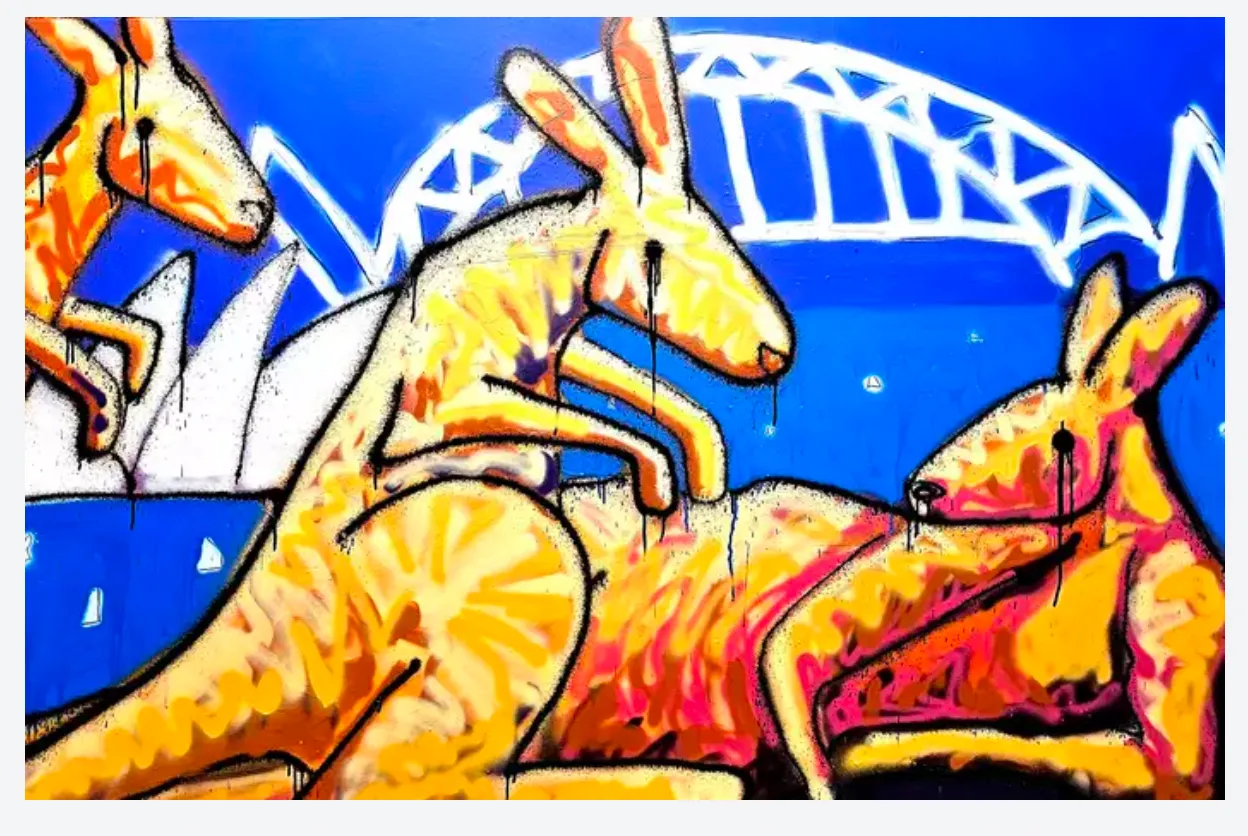
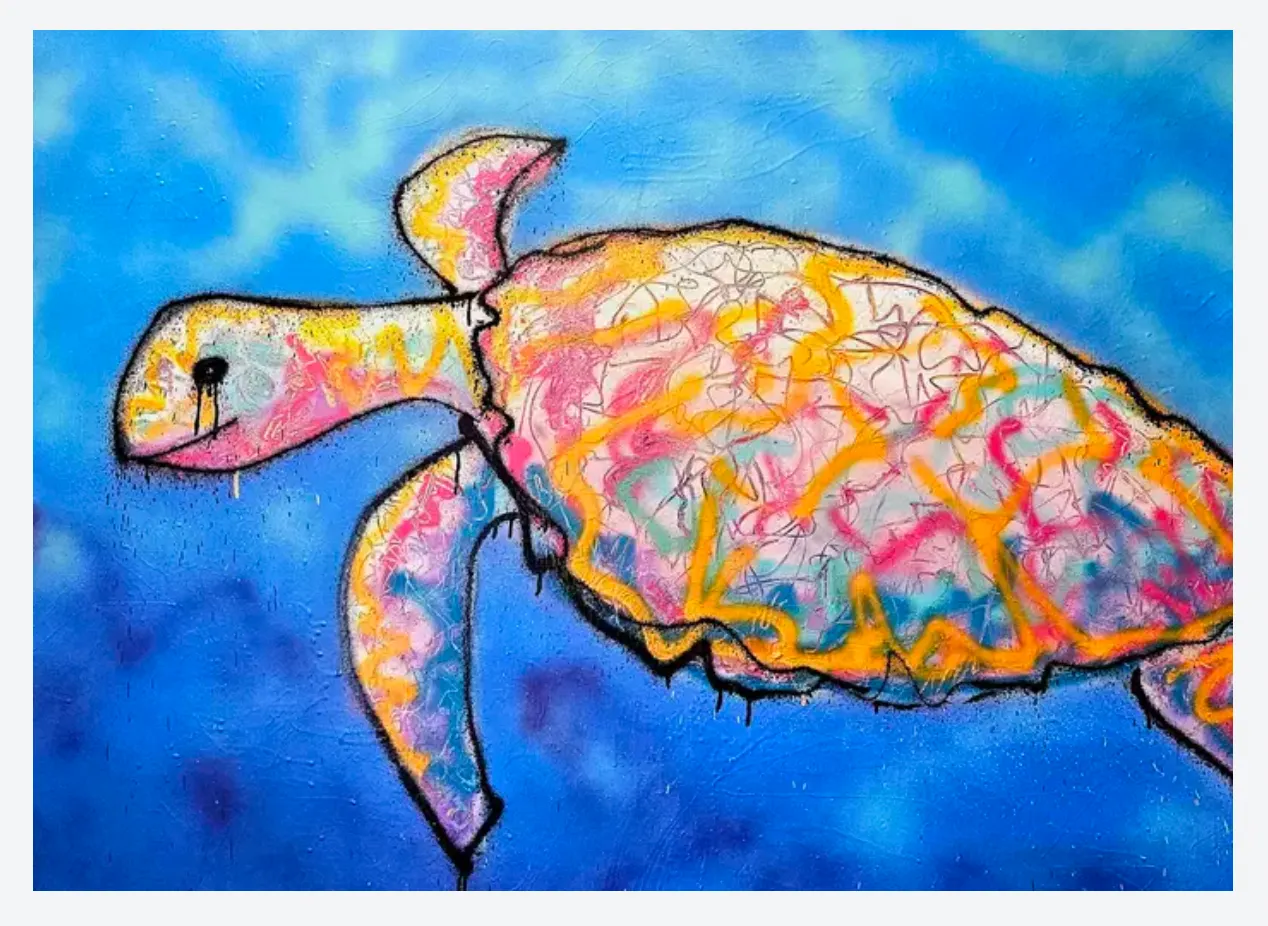
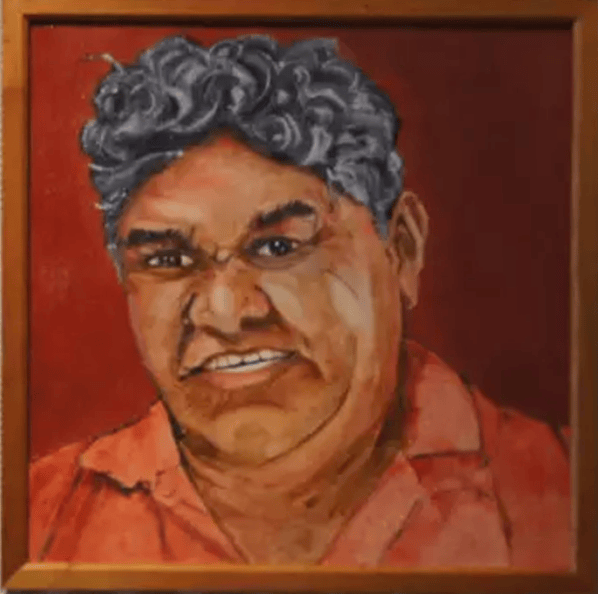
Life was not always a bowl of candy for Daniel. Indeed, he did not develop his ‘live the dream’ lifestyle until after experiencing heartbreak, setbacks and many challenges. In a very generous way, Daniel shares his take on overcoming Post-Traumatic Stress, and we gain insight and understanding from his account of healing. Daniel shows that Art is a form of healing in and of itself.
Daniel lifts his own mood, bringing joy to the people around him.
These days, Daniel is a Fine Art student, continually pushing the boundaries of painting in acrylic and spray-can on canvas as he studies for a Bachelor of Fine Arts at UTAS. Quite quickly, Daniel decided to make a go of a painting career and became an exhibitor in the BlueThumb Gallery. His career has not looked back since.
If you like these images read the whole article on Medium. I will soon be releasing more articles about Daniel and other artists who generously share their journeys. Please follow me to see more.
*Disclaimer: There are Benable Affiliate links and links to Benable, as this list site affords a way to finance this educational project while also enabling clear organisation of the process we will follow as we catalogue educational content for mural creation projects. (Students and collaborators can sign up here)
Building Texture with Matisse Structure
These are murals both big and small. They represent a learing curve.
This Blog is about the creation of texture, and the observations fit into points 5 and 6, Building Texture and Moving into Mixed Media.
Setting Up an Experimental Studio
For this experiment, I have chosen to use Matisse Structure over a basic layer of Chromacryl Student Acrylic to create an underpainting.
As this journal unfolds, I will work through these layers,
drawing up the mural
painting a loose washed underpainting
firming up details
capturing detail and rescuing outlines
building texture
moving into mixed media
spaces where finer details are required will emerge, and I will prime those spaces with Transparent Watercolour Ground.
glazing
finishing
To this, I simply daubed the paint on straight from the tube or ploughed it on with a palette knife. These techniques require an article of their own. (They will appear here soon). Once settled and dried on the painting, they were glazed over ready for the next step.
Heavy body acrylics are thick, buttery paints that retain brushstrokes, palette knife marks, and impasto effects exceptionally well. When applied with Matisse-inspired structural elements—bold shapes and organic forms—the physical texture created adds captivating depth to the mural surface.
2. Strong, Bold Visual Impact
Heavy body acrylics encourage thick, saturated layers that stand out visually and physically, making the mural feel lively and tangible. They invite a tactile exploration of the work.
3. Durability & Longevity
Heavy body acrylic paint is flexible and highly durable once dry, making it suitable for murals exposed to environmental factors. Textured surfaces created by thick applications remain intact longer than thinner, dull surfaces, enhancing the mural’s lifespan.
4. Expressive Brushwork & Tactile Feel
Combining Matisse’s expressive structural forms with heavy body paint lets artists use bold brush strokes, palette knives, and other tools to create energetic, tactile surfaces. This “built-up” texture invites viewers to experience the mural visually and almost physically.
5. Vibrancy & Color Saturation
Heavy body acrylics hold pigments densely, resulting in rich and vibrant colours and bold palettes. The structural arrangement of shapes, combined with powerful colours and enhanced by subtle and not-so-subtle elements, creates murals that attract and hold attention.
6. Versatility in Application
The thick consistency of heavy-body acrylics works well with various texture-building techniques. As this journal unfolds, we will experience techniques such as scumbling, layering, carving, or adding mediums like gels and textures.
7. Scale and Readability
For large murals, bold structures painted thickly help the design read well from a distance and create engaging detail up close. The physical texture adds a third dimension that enriches the viewing experience at all scales.
Drawing up the outlines at the River Lights Festival
Summary
Using heavy-body acrylic paint to apply Matisse-style structural elements in murals enables bold, vibrant, and durable textured works. It merges expressive form, vivid colour, and rich physical texture to create murals that are visually striking and tactilely engaging.
This River Lights Festival edition of my monthly newsletter, called Jo Creative Pursuites, is packed with information about the artistic aspects of the festival. Sign up if you would like to receive a copy of the newsletter on the first day of every month. My contribution to the festival this year is a three-day project, and you are invited to participate in a community mural.
I am the artist running the project, and in preparation, there will be a “cartoon” created so that participants know what to paint and where, with an ‘exemplar’, a section already painted, so that everyone knows exactly what to do. Do you want to be involved? The project starts on Friday night, when people come and view the exemplar. Then at 8.30 am on Saturday, 18th April 2026, we start! Come along anytime until 8.30 pm. You will be invited to and guided on how to paint. Sign up for the newsletter to keep informed of how the mural develops from inception until permanent installation on the fence of the Police Community Liaison Officers’ fence right around the corner from the Hot Springs.
I look forward to working with you and to seeing the project through to completion.
Email or ring if you would like more information.
To buy a hard copy of the book, email me direct and I will send one for $25 plus postage. Email Jo @ Comic_jo@outlook.com or text (don’t ring) 0439535958 and leave a message. If you would like to pick up Pulped, the soft-cover books are available at the Cunnamulla Visitor Information Centre, located in Centenary Park on Jane Street. Cunnamulla. In July, the audiobook will be available from Audible.com, but until then, you can download into your Kindle from Amazon.com. If you would prefer other file types, go to Pulped at this address.
River Lights Festival Exhibition – 9th April 6pm
Are you coming to the Festival Exhibition? The opening is on Thursday, the 9th of April at 6 pm. It will remain on display for the month. There will be prizes, and you will be asked to vote for “The People’s Choice”.
Xanthorrhoea (comprising roughly 30 species, all endemic to Australia).
Hospital which is a really attractive offering. Don’t forget to come along to see it.
The main character of this book is a 12-year-old boy called Willy. When he goes to juvie, he is young, vulnerable, and gullible; and he falls for the same old trap many young people do – the peer-pressure trap. Therefore, this book is suitable for young readers from 10 upwards. Some children go to juvie at the age of ten, and it seems a sensible recommendation to include children from this age.
However.
As Willy grows older, he becomes wiser and more astute, and his mentors begin to teach him how to navigate the world. So, the book is recommended for all youth because they will emerge from the story wiser and better equipped to think about the challenges young people face.
But wait!
Why am I recommending older people read it, too? The simple reason is that most of us have never really thought about what happens to kids when they are trundled off to juvenile detention. I passionately believe we should be thinking about the long-term consequences of incarcerating youth. If I say more, I might spoil the read!
Available on. https://amzn.asia/d/0ewNpy5V. Amazon as a download, but can be purchased here in Cunnamulla in a softcover format.
If you see me down on the block, ask about purchasing the book directly from me, or pick up a copy at the Cunnamulla Visitor Information Centre. Let’s face it, it is not often you can find a riveting read that the whole family can share.
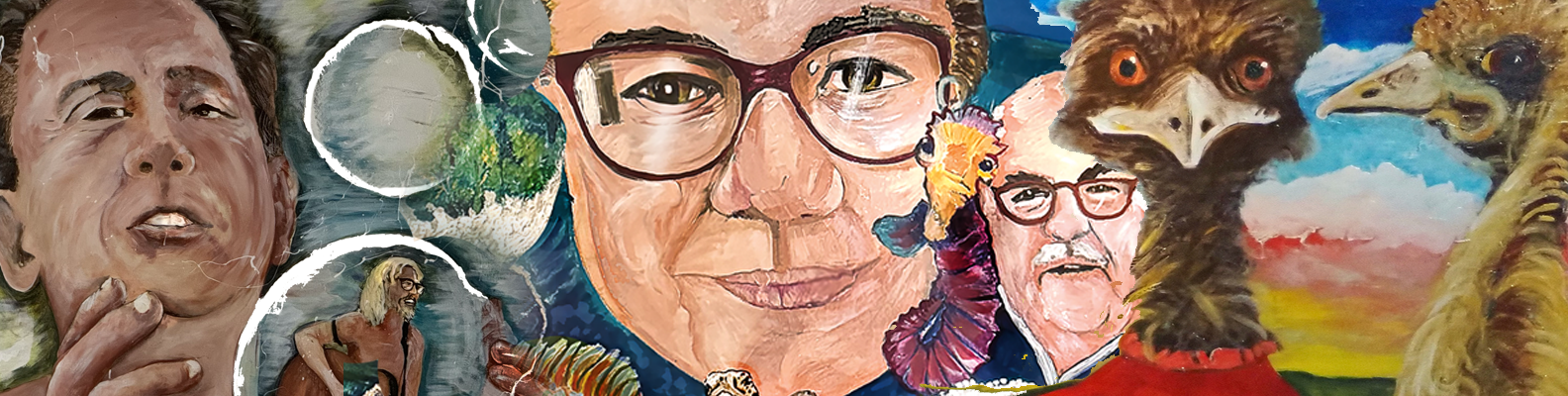
I am working on several portraits at the moment. Because a few people have asked to see examples of my work, I thought I would create a page with only portraits to clear away the clutter.
The girls were happy to pose for this portrait. We had fun at the time.
So, below you see our friend Cheesy. This was painted for an exhibition back down the track. This artwork is influenced by the colours of Cunnamulla. It is also reflective of the earthiness of the surroundings. It is raw and straightforward.
This is a picture of Tice with the cat from next door called Mr Laite.
And this is a picture of my old friend Phoonoo. (Painted with permission from Margo, her sister.)
This is a picture of my niece. Family is important to me, and this one was painted on holiday in Sydney.
Believe it or not, I met Dadi Janki when she was in Australia. Her philosophy is important to me to this day. I painted this picture. I was experimenting with subtle texture.
This illustration was painted one day when Cheesy and Dan took us out to explain the Sandhills of Cunnamulla.
And here you can see me experimenting with reflections. Again, these are my nieces reflected in my glasses when on a trip in Sydney.
Here is Trent working out at RESQ+
Those were the days.
These portraits were painted on boards for the graduation passing out parade at our school. It was a lot of fun.
I’ll add a few more when I photograph them in the morning.
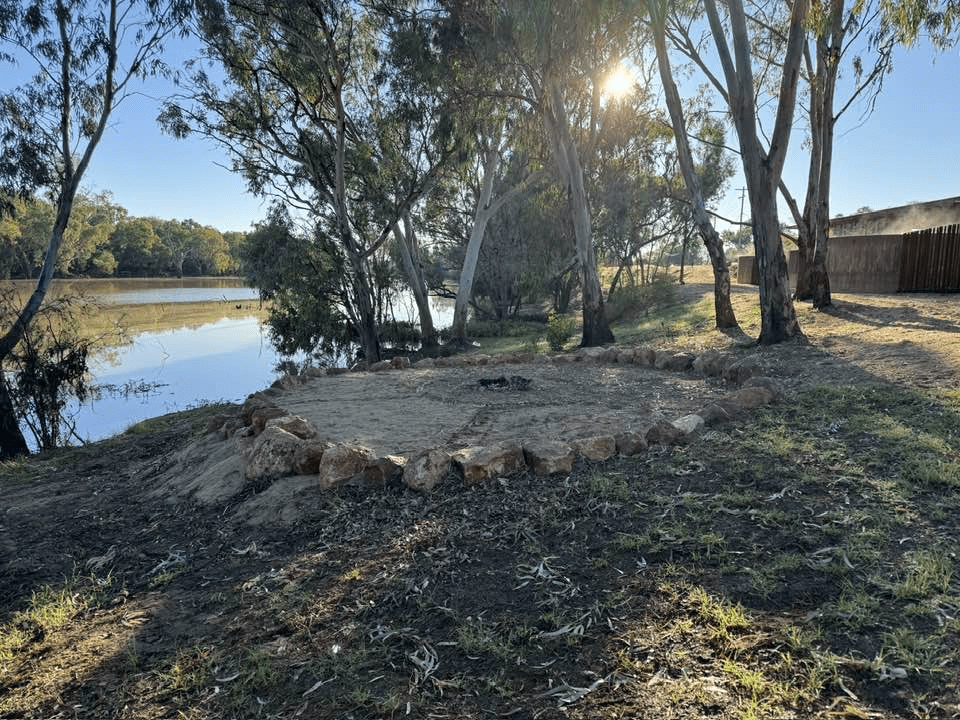
Once in the Hot Springs Complex, bathers will find various spaces to chill out, relax, and unwind. The Sand Art Mandala is a space where you can create temporary art for fun. For a day at least, your art becomes part of the relaxing ambience. It is part of the larger area at the Springs where bathers can launch their sporting activities on the water of the Warrego River. Swimming, kayaking, paddle boarding and the like.
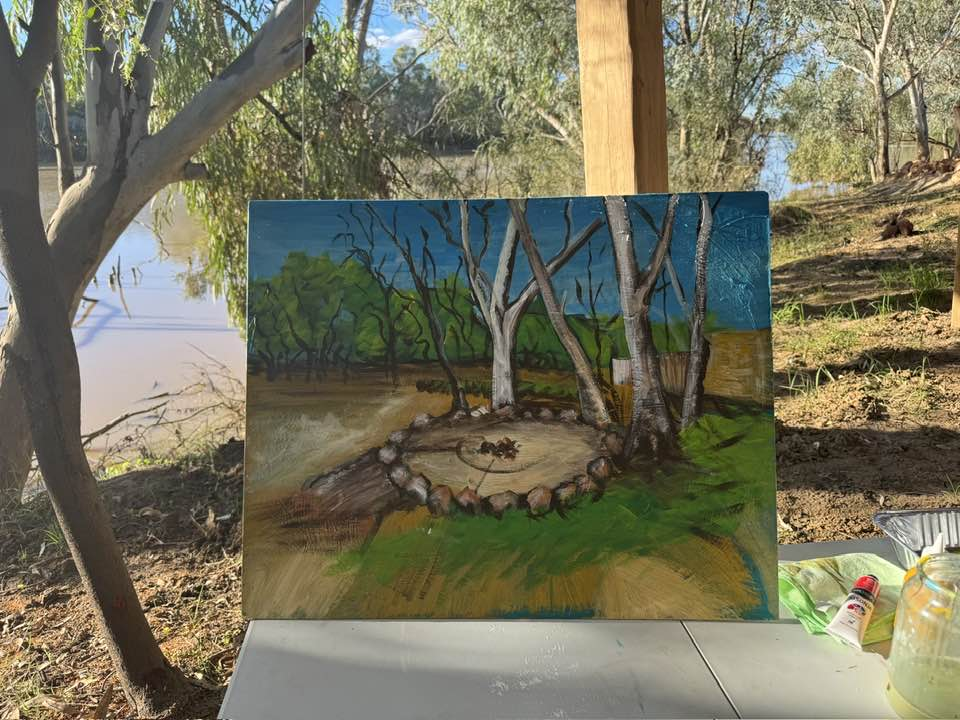
Circular Structure with Triangular Placement
I was surprised when this painting emerged on the canvas as it was not what I intended to paint!. But the circular structure attracted me. This is the underpainting. The one an artist does when planning out a painting, I will glaze this here in my unit and then go back out next weekend to put the reflections and leaves into the mix.
In the meantime, I will be playing with composition and planning the frame. The painting will become squarer, with the triangle artists love to use, skewing to the left while viewers look at it. The frame will be the red colour of the dirt here, and the red will echo onto the rocks.
As I glaze and prepare the frame for this painting, I will journal about it here. It won’t work as a painting until all of the various contrasted textures are added.
I have been down and checked out the tent, and I will have a pleasant day painting. You can see that the view is now being captured from a different aspect. There are many different ways to become involved in the spaces at the Hot Springs. There is a relaxation space where writers can charge their devices and sit in a quiet atmosphere of contemplation. As well as the swimming complex their is a space below where bathers can access the river bank. Soon I intend to start launching my kayak from there.
This is a bush tent set aside for relaxation. People can laze back and read books or chill out between adventures on the river.
This is the space where everything will happen throughout the day. I am not after a finished painting at this stage. Rather, I want to get started. Set up a way of working. I will add to this post throughout the day. It was 8am when this photo was taken. The riverscape will change as the day warms.
The image of the Artesian Bore Bath above is particularly inviting. It portrays an image of health and clear, fresh well-being. But as a contrast, look at the image below which was taken very close by. I took advantage of a Poster Factory special lately, where, as an artist, I could receive a free introductory print if I paid postage. Surprisingly, I chose to have the print below made up for framing. It will be called – Three Rocks in a Surreal Landscape. This photo symbolises the morning I got lost trying to find my way back from the Cactus Farm. There was nothing to judge by, and the Map on my phone could not get its bearings amongst the rabbit warren, piled mine discards. There is nothing to judge direction by – just more and more mine discards. You can sense why I say ARID.
There is a fun, crazy side to Lightening Ridge, contrasted to a crazy opal mining aura. Both things kinda collide and then gel at the Lightening Ridge Bowls Club, where it seems to me that people do a whole lot of gambling; being a poor struggling artist, I do a whole lot of watching others gamble while I sit at my laptop and toil away. Pokies and Keno and partying. But I like it.
Some places like the one featured below are compact, cosy and classy.
I will spend the morning here at the John Murray Gallery, then the Hot Springs again. It was beautiful this morning at about 6am, and there were heaps of people there. It seems that many come for a swim before work, and the feeling is very relaxed. However, the pool is shut from 10am – 12pm so I have to plan around the closure.
I think I will go back to the Bowls Club and do a bit more writing before making my way home.
It is a long way to pick up the bits and pieces needed to mount an exhibition! I am in an outback motel ‘living it up’ at Lightening Ridge. I have come to pick up this Milk Can.
All my trips are not just about building my business, which will eventually be an Art Gallery. The trips are also about defining my artistic process. I missed so many photo opportunities last night because I was driving. I snapped this one when I reached LR.
I will get out to the outlook tonight and capture images I couldn’t take while driving. I will meet a lady in Moree at lunchtime and pick up a milk can for $290. Seems expensive? That is the market price for ‘milk can’ because they are difficult to find. Even if you do find one, people will not let them go.
To justify such a long trip to pick up an item – I need to fit in a fair bit of creative work. Stay tuned.