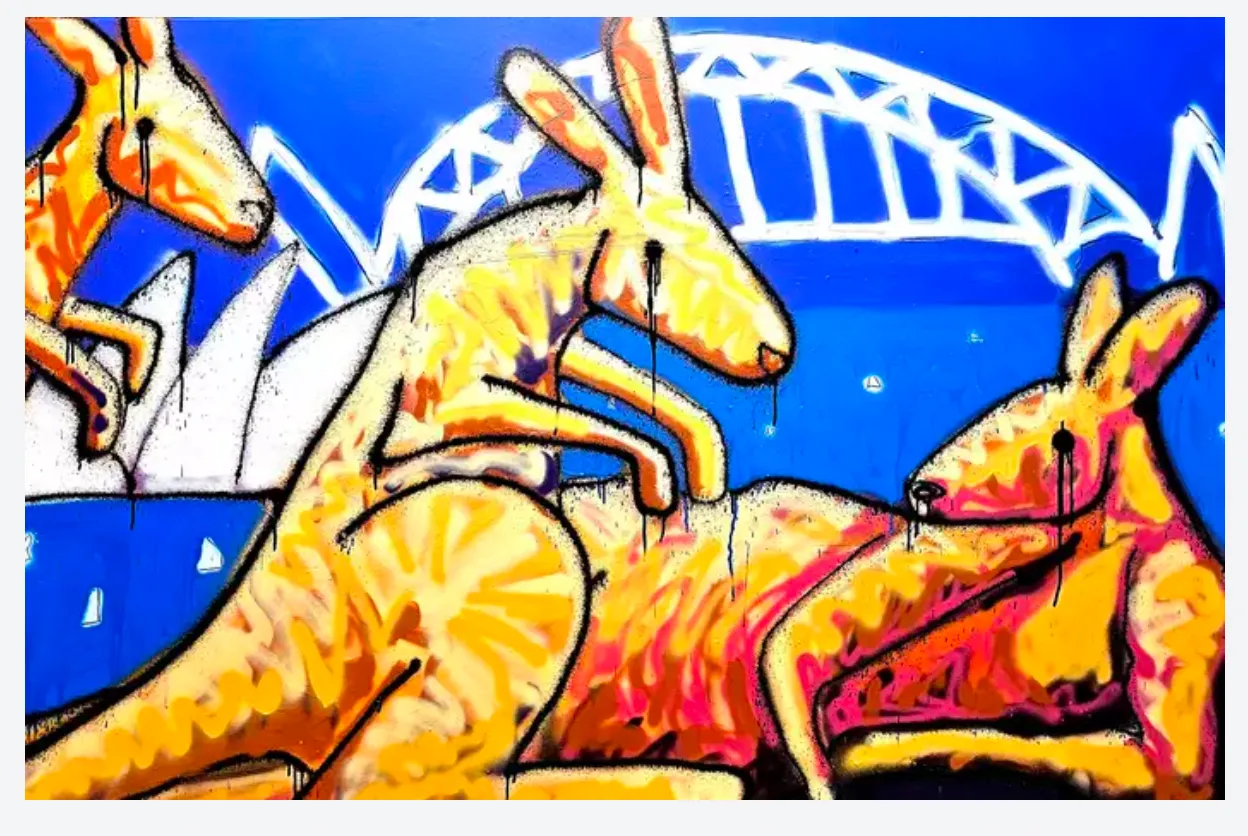
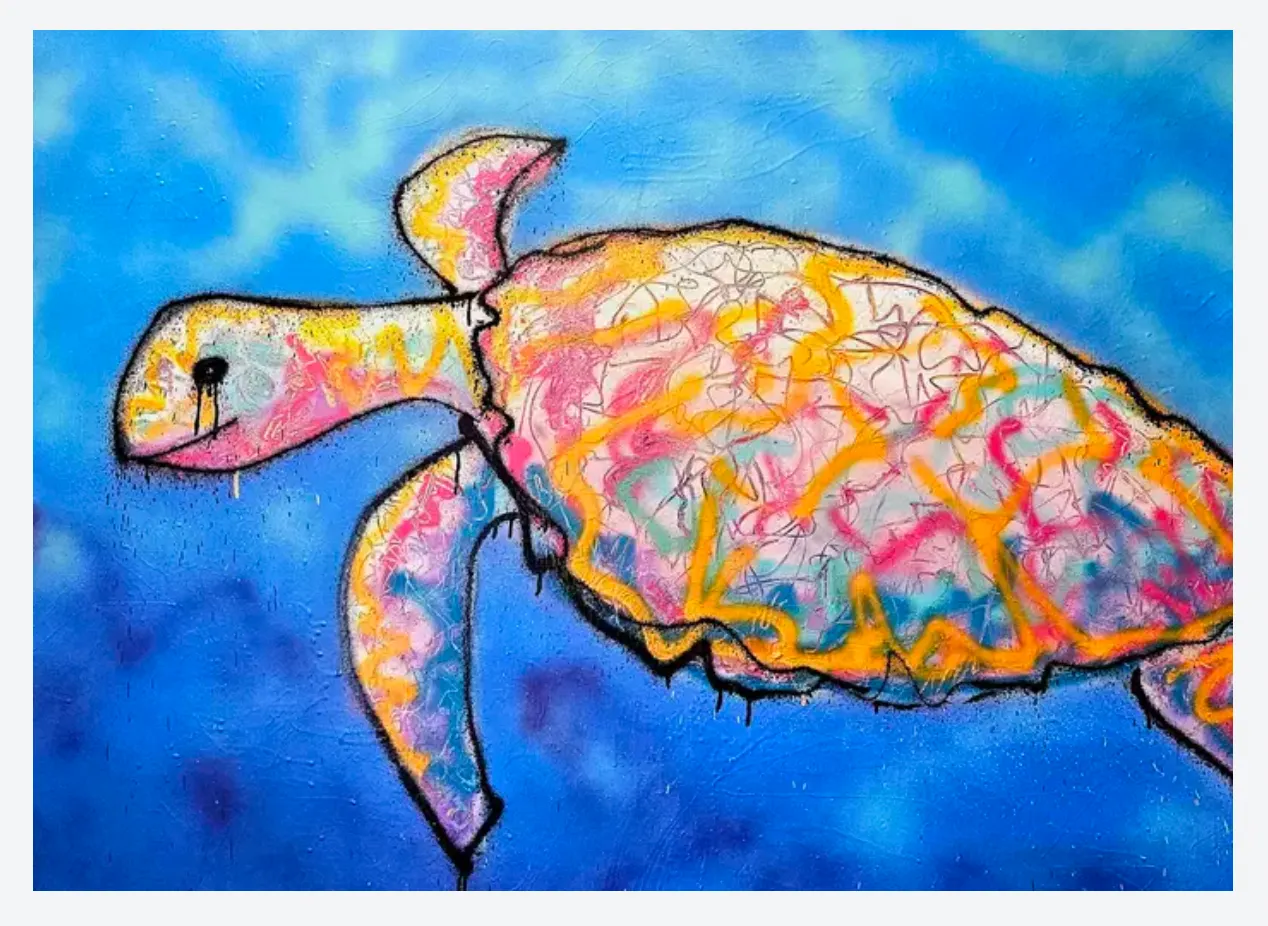
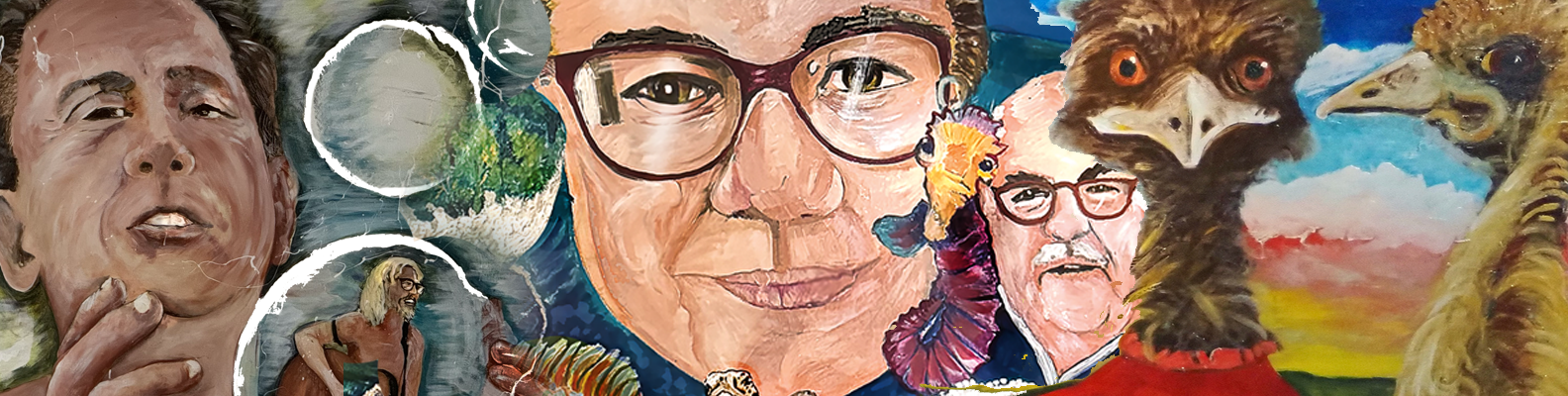
Life was not always a bowl of candy for Daniel. Indeed, he did not develop his ‘live the dream’ lifestyle until after experiencing heartbreak, setbacks and many challenges. In a very generous way, Daniel shares his take on overcoming Post-Traumatic Stress, and we gain insight and understanding from his account of healing. Daniel shows that Art is a form of healing in and of itself.
Daniel lifts his own mood, bringing joy to the people around him.
These days, Daniel is a Fine Art student, continually pushing the boundaries of painting in acrylic and spray-can on canvas as he studies for a Bachelor of Fine Arts at UTAS. Quite quickly, Daniel decided to make a go of a painting career and became an exhibitor in the BlueThumb Gallery. His career has not looked back since.
If you like these images read the whole article on Medium. I will soon be releasing more articles about Daniel and other artists who generously share their journeys. Please follow me to see more.
*Disclaimer: There are Benable Affiliate links and links to Benable, as this list site affords a way to finance this educational project while also enabling clear organisation of the process we will follow as we catalogue educational content for mural creation projects. (Students and collaborators can sign up here)
Building Texture with Matisse Structure
These are murals both big and small. They represent a learing curve.
This Blog is about the creation of texture, and the observations fit into points 5 and 6, Building Texture and Moving into Mixed Media.
Setting Up an Experimental Studio
For this experiment, I have chosen to use Matisse Structure over a basic layer of Chromacryl Student Acrylic to create an underpainting.
As this journal unfolds, I will work through these layers,
drawing up the mural
painting a loose washed underpainting
firming up details
capturing detail and rescuing outlines
building texture
moving into mixed media
spaces where finer details are required will emerge, and I will prime those spaces with Transparent Watercolour Ground.
glazing
finishing
To this, I simply daubed the paint on straight from the tube or ploughed it on with a palette knife. These techniques require an article of their own. (They will appear here soon). Once settled and dried on the painting, they were glazed over ready for the next step.
Heavy body acrylics are thick, buttery paints that retain brushstrokes, palette knife marks, and impasto effects exceptionally well. When applied with Matisse-inspired structural elements—bold shapes and organic forms—the physical texture created adds captivating depth to the mural surface.
2. Strong, Bold Visual Impact
Heavy body acrylics encourage thick, saturated layers that stand out visually and physically, making the mural feel lively and tangible. They invite a tactile exploration of the work.
3. Durability & Longevity
Heavy body acrylic paint is flexible and highly durable once dry, making it suitable for murals exposed to environmental factors. Textured surfaces created by thick applications remain intact longer than thinner, dull surfaces, enhancing the mural’s lifespan.
4. Expressive Brushwork & Tactile Feel
Combining Matisse’s expressive structural forms with heavy body paint lets artists use bold brush strokes, palette knives, and other tools to create energetic, tactile surfaces. This “built-up” texture invites viewers to experience the mural visually and almost physically.
5. Vibrancy & Color Saturation
Heavy body acrylics hold pigments densely, resulting in rich and vibrant colours and bold palettes. The structural arrangement of shapes, combined with powerful colours and enhanced by subtle and not-so-subtle elements, creates murals that attract and hold attention.
6. Versatility in Application
The thick consistency of heavy-body acrylics works well with various texture-building techniques. As this journal unfolds, we will experience techniques such as scumbling, layering, carving, or adding mediums like gels and textures.
7. Scale and Readability
For large murals, bold structures painted thickly help the design read well from a distance and create engaging detail up close. The physical texture adds a third dimension that enriches the viewing experience at all scales.
Drawing up the outlines at the River Lights Festival
Summary
Using heavy-body acrylic paint to apply Matisse-style structural elements in murals enables bold, vibrant, and durable textured works. It merges expressive form, vivid colour, and rich physical texture to create murals that are visually striking and tactilely engaging.
This photo definitely wasn’t an afterthought—something I just happened to snap at the Hot Springs this morning. On the contrary, I was exploring a theme that will emerge through my work until culminating in an exhibition at the Information Centre in September. 2024.
Abstract paintings will explore the nexus between man-planned and nature. When the Hot Springs were designed, the architects and landscape artists did more than just fit into nature. They sought to fashion architectural forms that will fuse into the landscape.
This curvilinear shape reminds me of an artist’s palette; in a sense, that’s what the springs will be for many: a space where kookaburras sit quietly, gazing out over the water while writers write and gardeners laze and dream.
Look into this image. What do you see? I see a fertile space where creativity can surge from the depths of experience.
Clitoria ternatea is called the blue butterfly and Darwin pea. It is named after the island where botanist Carl Linnaeus’s specimens originated: the Ternate Island, located in the Maluku Islands. It is commonly found in South and Southeast Asia but has also been introduced to Australia. (1) This delicious plant is growing at RESQ, and when I go there during the week, I pick some and eat it. The taste grows on you. But once dried (or even before) it can be brewed into a delicious tea.
In Southeast Asia, the butterfly pea flower is a versatile ingredient, used not only as a natural food colouring for glutinous rice and desserts like Eurasian Portugal but also as ayurvedic medicine. In Kelantan, Malaysia, it’s a key component of nasi kerabu, lending its unique bluish hue. In Burmese and Thai cuisines, the flowers take on a different role, being dipped in butter and fried. They even find their way into the Nyonya dish Pulot tartal, adding a touch of colour. [2]
Butterfly pea flower tea, a popular beverage in Thailand and Vietnam, is crafted from ternatea flowers and dried lemongrass. Its unique feature is its ability to change colour, depending on the additives. For instance, lemon juice transforms it into a vibrant purple. In these countries, the tea is often mixed with honey and lemon, enhancing its acidity and turning the drink into a delightful pink-purple. It’s a refreshing option at partys, and can be enjoyed in both hot and cold forms.
The Darwin Pea grows as a vine or creeper, doing well in moist, neutral soil. Children from school are growing them in pots and eventually they will go into a sensory garden. Although grown as ornamental plants, they are extensively grown in coal mines throughout Australia as revegetation plants because they require very little care once cultivated. Clitoria ternatea, a legume, has a unique ability to form a symbiotic association with soil bacteria called rhizobia. This partnership allows the plant to convert atmospheric N2 into a form that it can use, a process known as nitrogen-fixing. This benefits the plant and improves the soil quality, a practice known as plant fixing. The plant’s ability to decompose nitrogen-rich material further enhances soil. Additionally, it’s worth noting that Clitoria ternatea is rarely affected by disease or pests, making it a resilient and low-maintenance choice for gardeners. [3]
Wikipedia, The Free Encyclopedia, was referenced for this piece. However, I can see the benefits of cultivating this plant from day-to-day interaction. The article Organic Gardening – Cunnamulla Styledescribes our approach to natural, organic gardening. And this article from Healthline shows how the butterfly pea flower is rich in antioxidants and linked to several health benefits, including weight loss, blood sugar control, and hair and skin health.
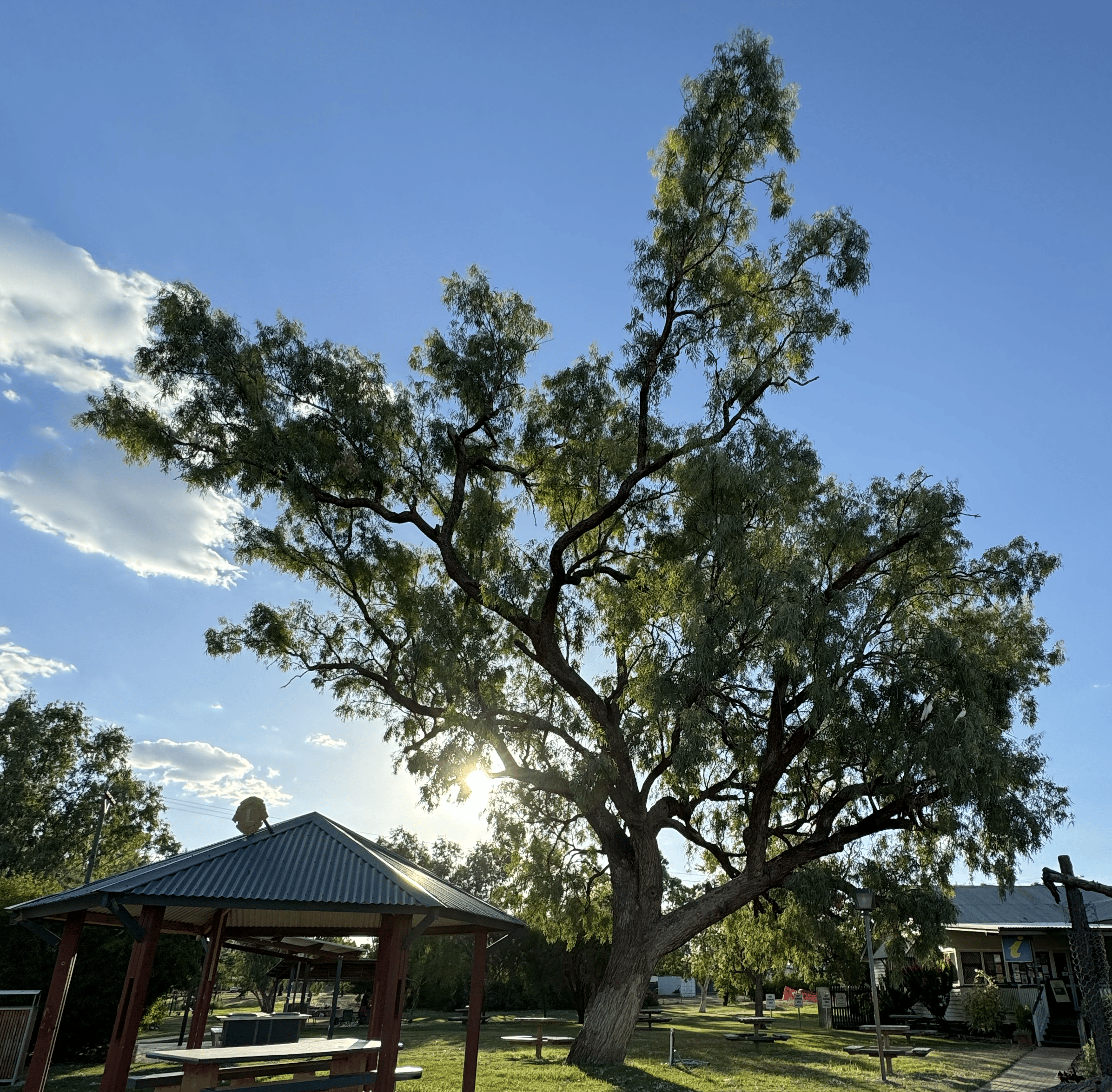
As you come in over the Land Bridge into Cunnamulla, there is a beautiful leafy green park. There iare swings, picnic tables, gym equipment and lots of space to exercise.
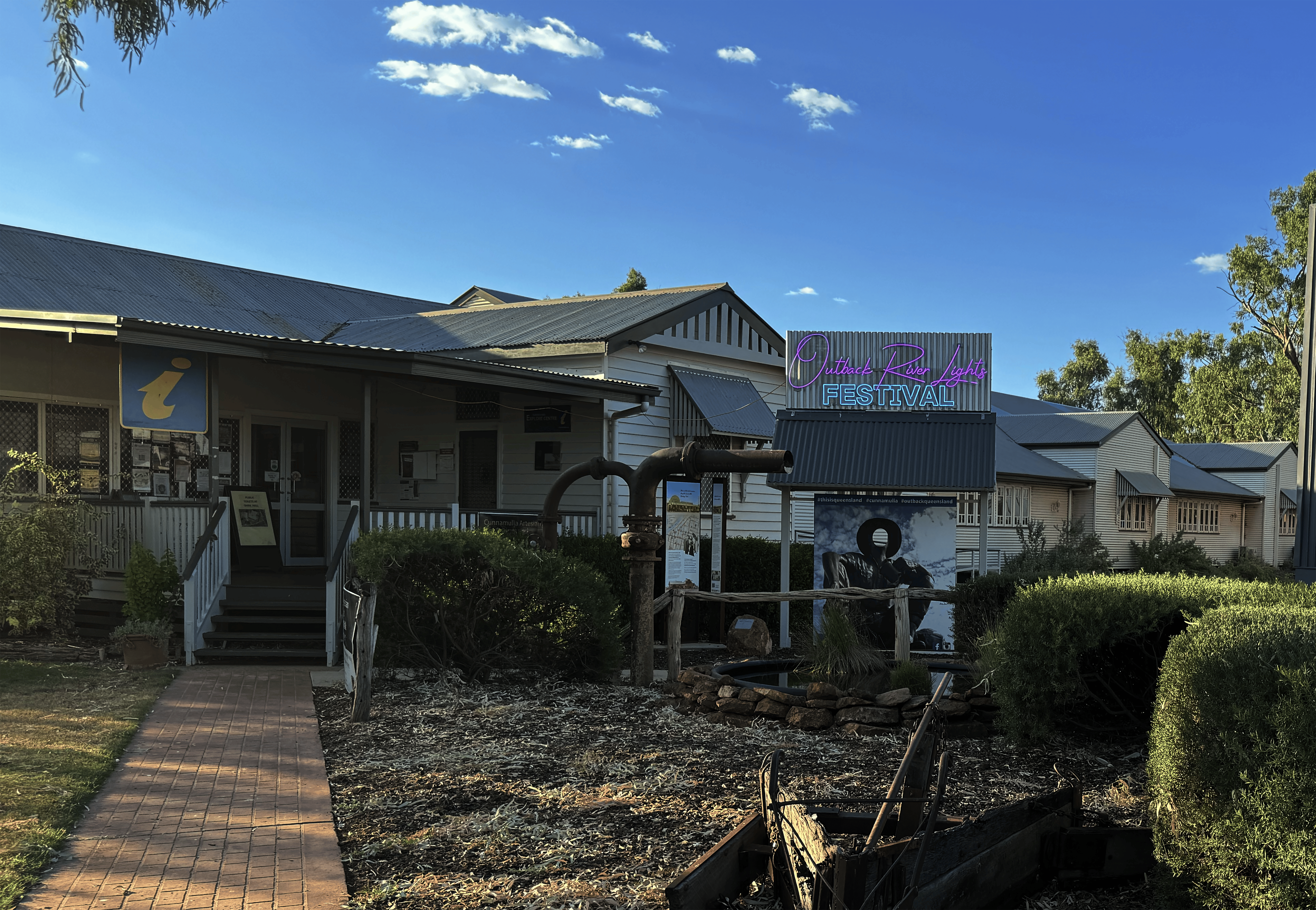
If you travellers go right through the park, they end up at the information centre. It offers complimentary coffee; inside the info centre is an art gallery and a historic museum. Travellers can also charge their devices and buy memorabilia. Do drop in it is worth the visit.
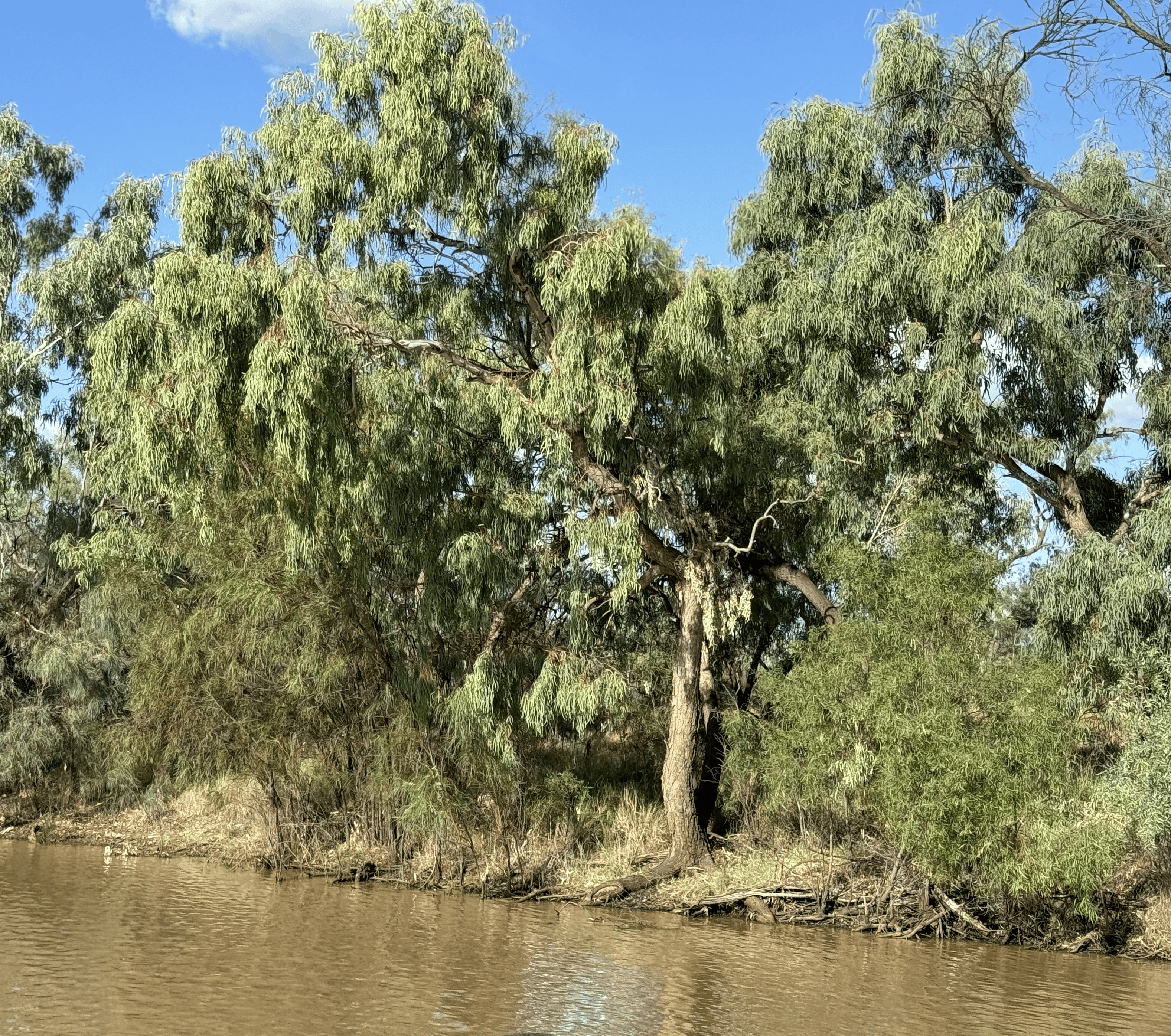
I went back out to the Allan Tannock Weir today to experiment with the panoramic function on my new camera. I think it works well, but I also need to learn a lot more about using the images on products. I love the weir, and I regard the trees along the river as sculptures. I will spend the weekend on the Warrego. I intend to pay for the whole weekend at the Hot Springs with the kayak on the bank below. At the moment, the Hot Springs is only open from 6-9am and then 5-9, so I will sit on the bank and do writing, painting and other work in the middle of the day.
There is a jetty like this at the Weir and then another just down from the Hot Springs. They are like a launching pad into a world of serenity. If you look to the left you can see a dip where we drop our kayaks into the water.
Every weekend, as I go out on the kayak, I intend to do a ‘portrait’ of a different tree. They all stand majestic and tall OR weather-beaten and driftwooded by the rise and fall of the water level. Sometimes at work, I drift off to my ‘creative space’ – thinking about what lies in store in the afternoon twilight.
Built on the Bollon River, the main street is lined with trees, and gums line the river in the background.
Bollon is a town where travellers need to be self-starters to find something to do. Kayaking, fishing, and camping in the peaceful surroundings, Bollon is a place to relax and unwind. More to the point, it is a crossroads to the townships nearby. Coming from Cunnamulla, travellers turn right and travel through Dirranbandi or go straight ahead and land in St George another beautiful river town.
Meals can be enjoyed at the hotel or the local cafe called “Deb’s Cafe”. I enjoyed a hearty breakfast there today for under $25.