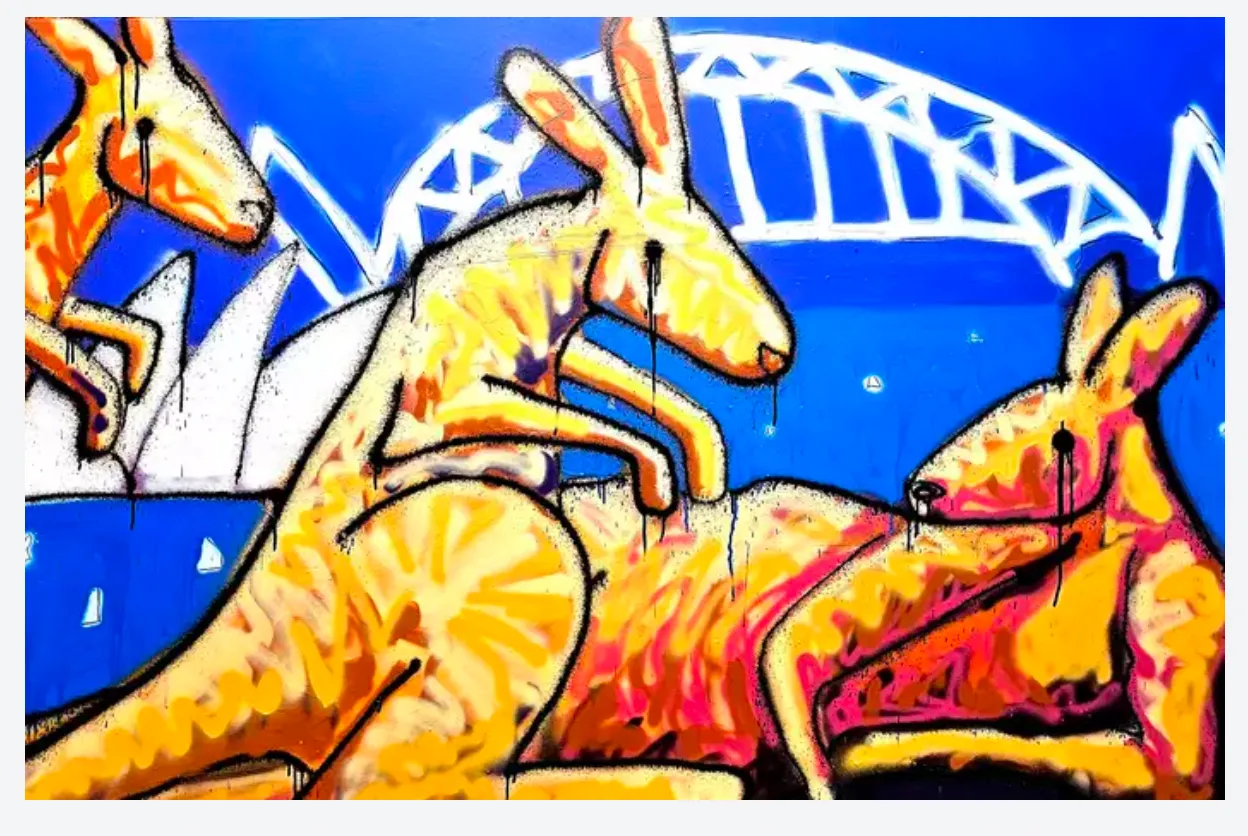
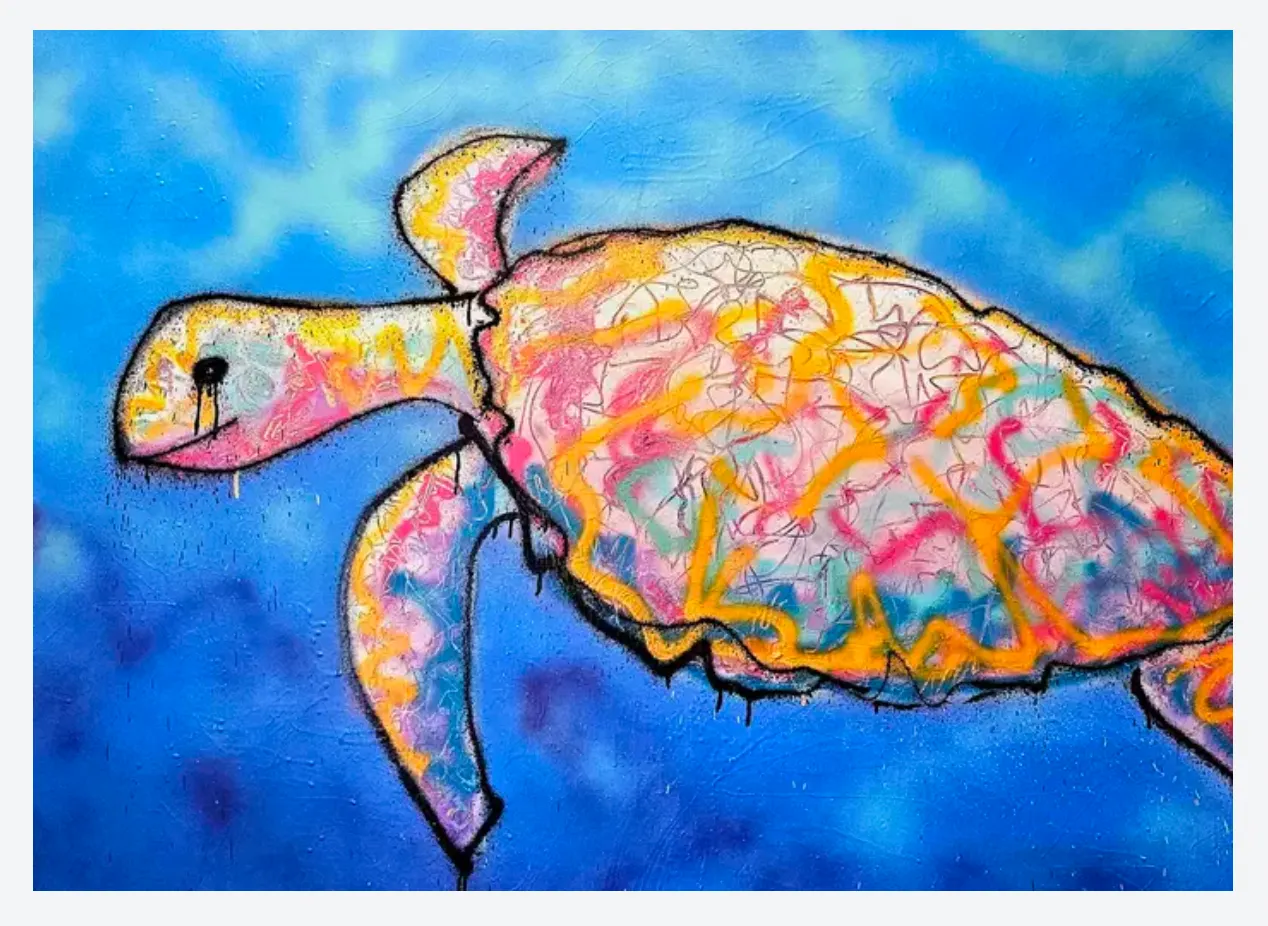
Life was not always a bowl of candy for Daniel. Indeed, he did not develop his ‘live the dream’ lifestyle until after experiencing heartbreak, setbacks and many challenges. In a very generous way, Daniel shares his take on overcoming Post-Traumatic Stress, and we gain insight and understanding from his account of healing. Daniel shows that Art is a form of healing in and of itself.
Daniel lifts his own mood, bringing joy to the people around him.
These days, Daniel is a Fine Art student, continually pushing the boundaries of painting in acrylic and spray-can on canvas as he studies for a Bachelor of Fine Arts at UTAS. Quite quickly, Daniel decided to make a go of a painting career and became an exhibitor in the BlueThumb Gallery. His career has not looked back since.
If you like these images read the whole article on Medium. I will soon be releasing more articles about Daniel and other artists who generously share their journeys. Please follow me to see more.
*Disclaimer: There are Benable Affiliate links and links to Benable, as this list site affords a way to finance this educational project while also enabling clear organisation of the process we will follow as we catalogue educational content for mural creation projects. (Students and collaborators can sign up here)
Building Texture with Matisse Structure
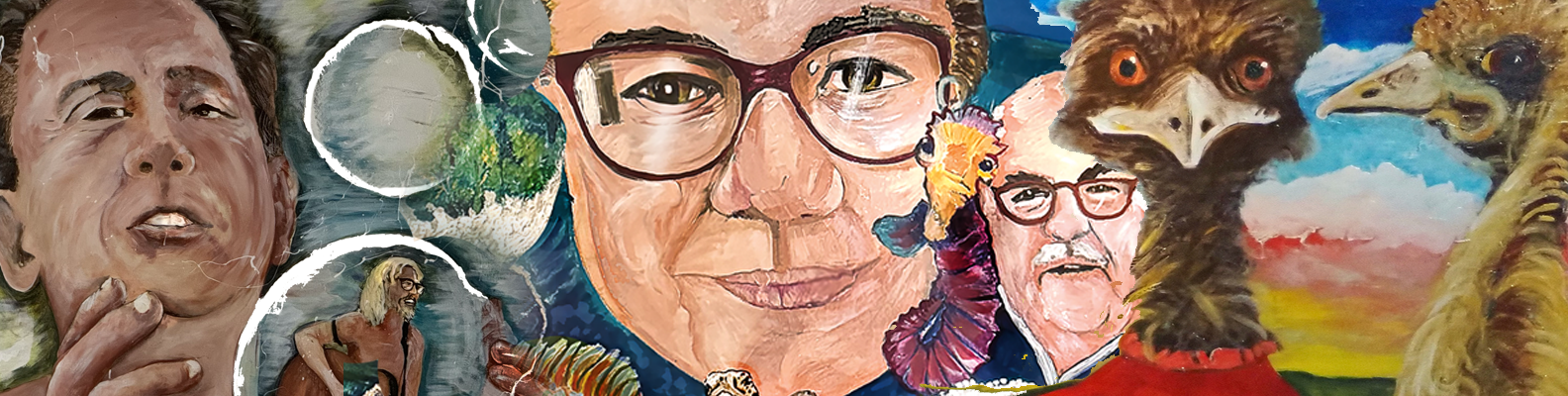
These are murals both big and small. They represent a learing curve.
This Blog is about the creation of texture, and the observations fit into points 5 and 6, Building Texture and Moving into Mixed Media.
Setting Up an Experimental Studio
For this experiment, I have chosen to use Matisse Structure over a basic layer of Chromacryl Student Acrylic to create an underpainting.
As this journal unfolds, I will work through these layers,
drawing up the mural
painting a loose washed underpainting
firming up details
capturing detail and rescuing outlines
building texture
moving into mixed media
spaces where finer details are required will emerge, and I will prime those spaces with Transparent Watercolour Ground.
glazing
finishing
To this, I simply daubed the paint on straight from the tube or ploughed it on with a palette knife. These techniques require an article of their own. (They will appear here soon). Once settled and dried on the painting, they were glazed over ready for the next step.
Heavy body acrylics are thick, buttery paints that retain brushstrokes, palette knife marks, and impasto effects exceptionally well. When applied with Matisse-inspired structural elements—bold shapes and organic forms—the physical texture created adds captivating depth to the mural surface.
2. Strong, Bold Visual Impact
Heavy body acrylics encourage thick, saturated layers that stand out visually and physically, making the mural feel lively and tangible. They invite a tactile exploration of the work.
3. Durability & Longevity
Heavy body acrylic paint is flexible and highly durable once dry, making it suitable for murals exposed to environmental factors. Textured surfaces created by thick applications remain intact longer than thinner, dull surfaces, enhancing the mural’s lifespan.
4. Expressive Brushwork & Tactile Feel
Combining Matisse’s expressive structural forms with heavy body paint lets artists use bold brush strokes, palette knives, and other tools to create energetic, tactile surfaces. This “built-up” texture invites viewers to experience the mural visually and almost physically.
5. Vibrancy & Color Saturation
Heavy body acrylics hold pigments densely, resulting in rich and vibrant colours and bold palettes. The structural arrangement of shapes, combined with powerful colours and enhanced by subtle and not-so-subtle elements, creates murals that attract and hold attention.
6. Versatility in Application
The thick consistency of heavy-body acrylics works well with various texture-building techniques. As this journal unfolds, we will experience techniques such as scumbling, layering, carving, or adding mediums like gels and textures.
7. Scale and Readability
For large murals, bold structures painted thickly help the design read well from a distance and create engaging detail up close. The physical texture adds a third dimension that enriches the viewing experience at all scales.
Drawing up the outlines at the River Lights Festival
Summary
Using heavy-body acrylic paint to apply Matisse-style structural elements in murals enables bold, vibrant, and durable textured works. It merges expressive form, vivid colour, and rich physical texture to create murals that are visually striking and tactilely engaging.